Gartner says govern your decisions first. Start with the one your AI already makes.
Gartner tells CMOs to govern their highest-value, highest-risk decisions before AI makes them. Brand positioning tops the list, and every prompt is already deciding it.
Gartner's new playbook for CMOs, From Tasks to Decisions¹, makes a point that is easy to agree with and hard to act on. Marketing decisions sit inside workflows, run on inconsistent logic and are hard to govern at scale. As AI influences more of them, leaders need to know which decisions matter most and where governance is required.
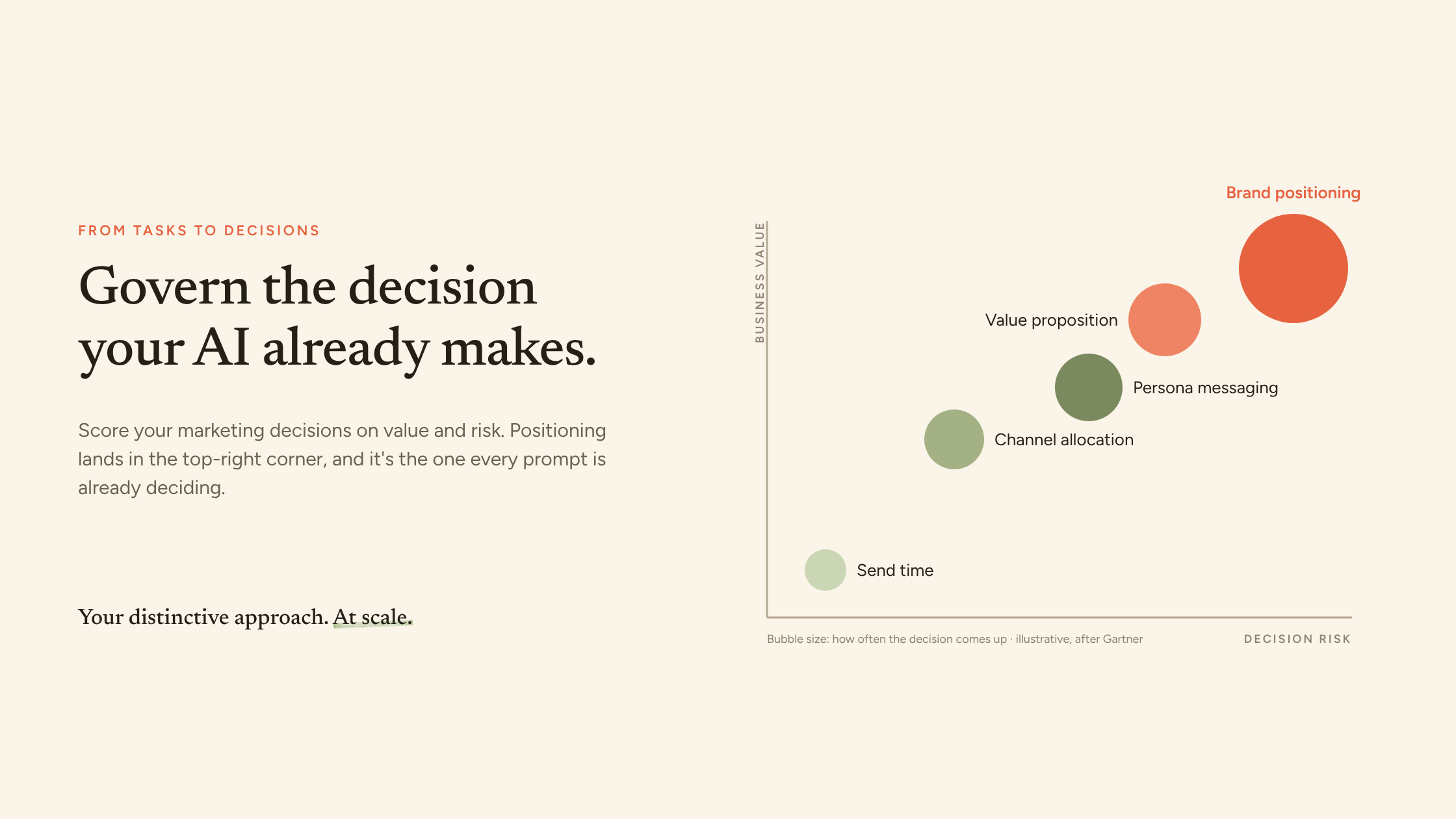
The advice is practical. Score your recurring marketing decisions on business value, risk and frequency. Pick the three to five that score highest. Map them, give each an owner and put oversight on them before AI starts making them for you.
Look at where Gartner's own example lands. Brand positioning sits in the top-right corner of their chart, with the highest business value and the highest risk of getting it wrong. Their list of everyday decisions sits right next to it: which value proposition to emphasise, which brand narrative to convey, how to tailor messaging for each persona.
Those decisions are already being made
Every time someone on your team asks Claude for a campaign brief, an agency drafts a landing page or an outbound tool writes a sequence, one of those decisions gets made. If nobody wrote down which value proposition leads and why customers choose you over the alternatives, the model fills that gap with assumptions of its own. The output reads well. It runs on positioning nobody signed off.
The output reads well. It runs on positioning nobody signed off.
That is Gartner's second shift, from implicit to governed decisions, playing out one prompt at a time.
Why the usual answers fall short
Most companies already have something to point to: a strategy deck, a positioning framework, messaging guidelines and, lately, AI platforms with their own brand settings. Each helps. None of them is an explicit theory of winning that your leadership team has signed off and that every tool can reach. The deck explains where you are going, and each platform holds whatever someone typed into its onboarding wizard. An agent picking up a task needs to know why you win and against which alternative, in the tool it is working in, every time.
What governing the top-right corner looks like
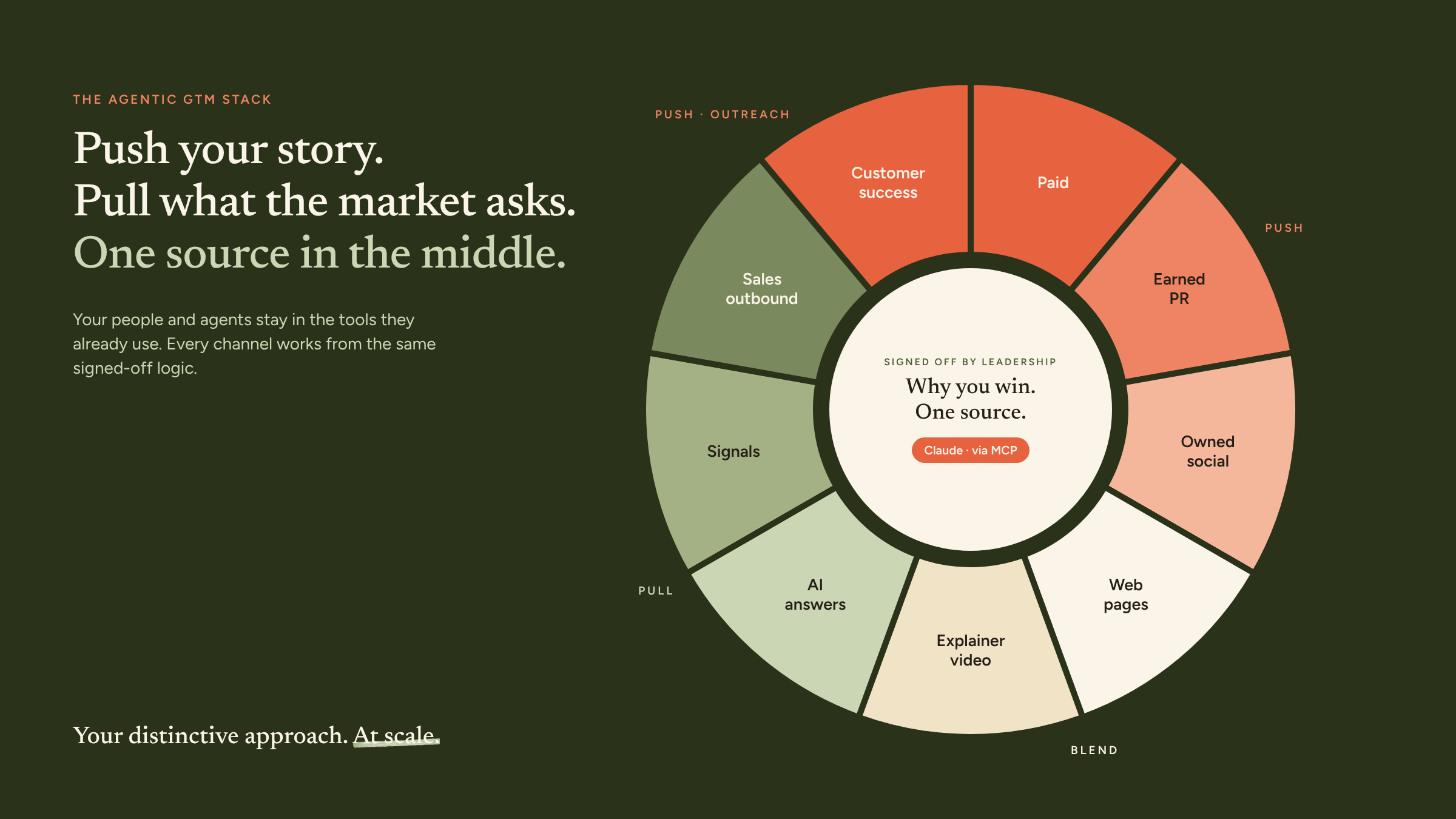
This is the corner Baaken is built for. We start from your website and existing material and draft a first version of your strategy, narrative and positioning. Your leadership team then makes the choices: which segments to prioritise, which alternatives you compete against, what you claim and why customers will believe it. Once those choices are ratified, they become the source that people and AI agents work from. Through MCP that source is available in Claude, ChatGPT, Slack and Teams, so nobody has to rebuild the logic in a new tool.
It covers Gartner's third shift as well. They describe shared context as documented priorities, guardrails and decision criteria, so people and AI decide consistently. For us that is the competitive logic sitting on top of your data, signed off, and reaching every brief.
What surfaces when you do it
When a fast-growing SaaS vendor in skills management went through this, putting the logic in one place surfaced a distinctive position leadership hadn't seen, and a tension with a key buying persona nobody had resolved. Both were settled in the strategy and narrative work, before they reached a single campaign. The CEO said he hadn't expected the result.
Gartner maps the decisions. Baaken governs the ones that decide how you compete.
¹ Gartner, From Tasks to Decisions: The leadership playbook for building an AI-first marketing organization, September 2026. gartner.com/en/marketing

Co-founder of Baaken. Follow on LinkedIn