Your hybrid GTM needs a designer. Make sure it's you.
Rebuilding GTM as hybrid human and agent motions? Take the driver's seat: stay in your own tools, connect with MCP, and give agents your competitive logic.
Over the past months I've sat with our customers while they rebuilt their go-to-market. Marketing, sales and customer success are becoming hybrid motions, where people and AI agents share the work. In every room the same lesson came back. The setup decides almost everything, and it deserves far more thought than it usually gets.
Everything is moving at once
Every part of a GTM motion is changing in the same quarter. New vendors launch weekly, each wanting a piece of your process: content, outbound, signals, AI visibility. Put six together and you have six onboarding wizards, each asking for your positioning, ICP and tone of voice. Six copies of your strategy, each slightly different, none signed off by your leadership team.
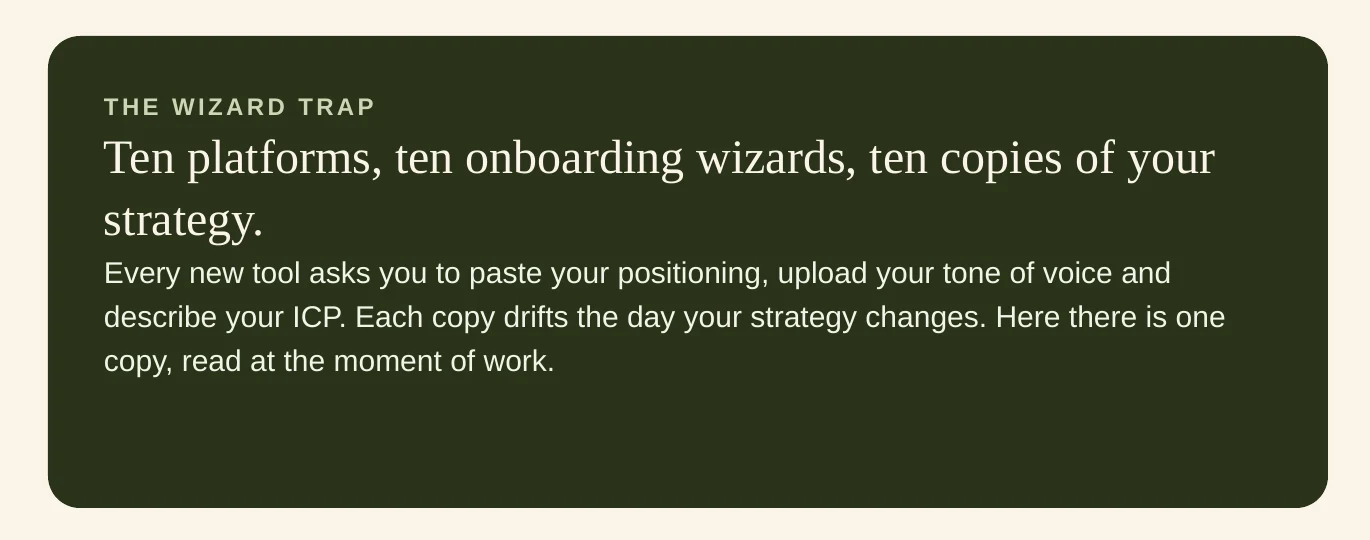
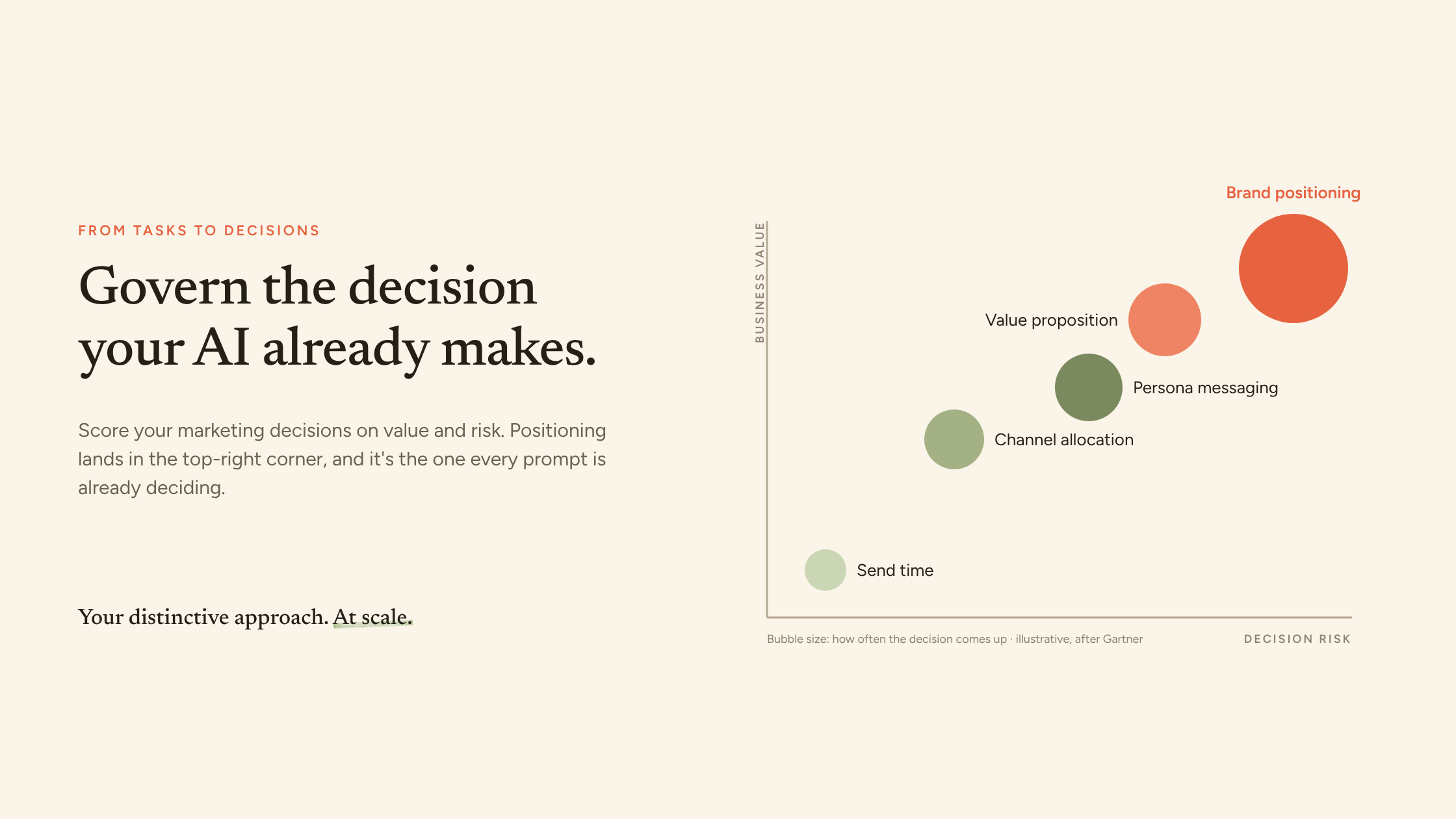
That's where an AI agent starts guessing. When the context you give it is incomplete or inconsistent, it fills the gaps with assumptions of its own. The output looks polished. It just runs on logic nobody chose.
Stay where your people already work
The customers who got this right did something unglamorous. They kept their processes and tools close to how they already worked. Content creation stayed with their own people and agencies, in the tools they knew, instead of moving to a new platform because its AI looked convenient.
For many of the operators I work with, the natural starting point turned out to be Claude. It's where they open a brief, pull in context and hand work on to other tools. MCP makes that possible. It's a generic connector, so the assistant your team already uses can talk to the systems you already have. You decide how the hybrid process runs and where agents sit in it. The tech stack follows that decision.
You decide how the hybrid process runs and where agents sit in it. The tech stack follows that decision.
Context is the logic on top of the data
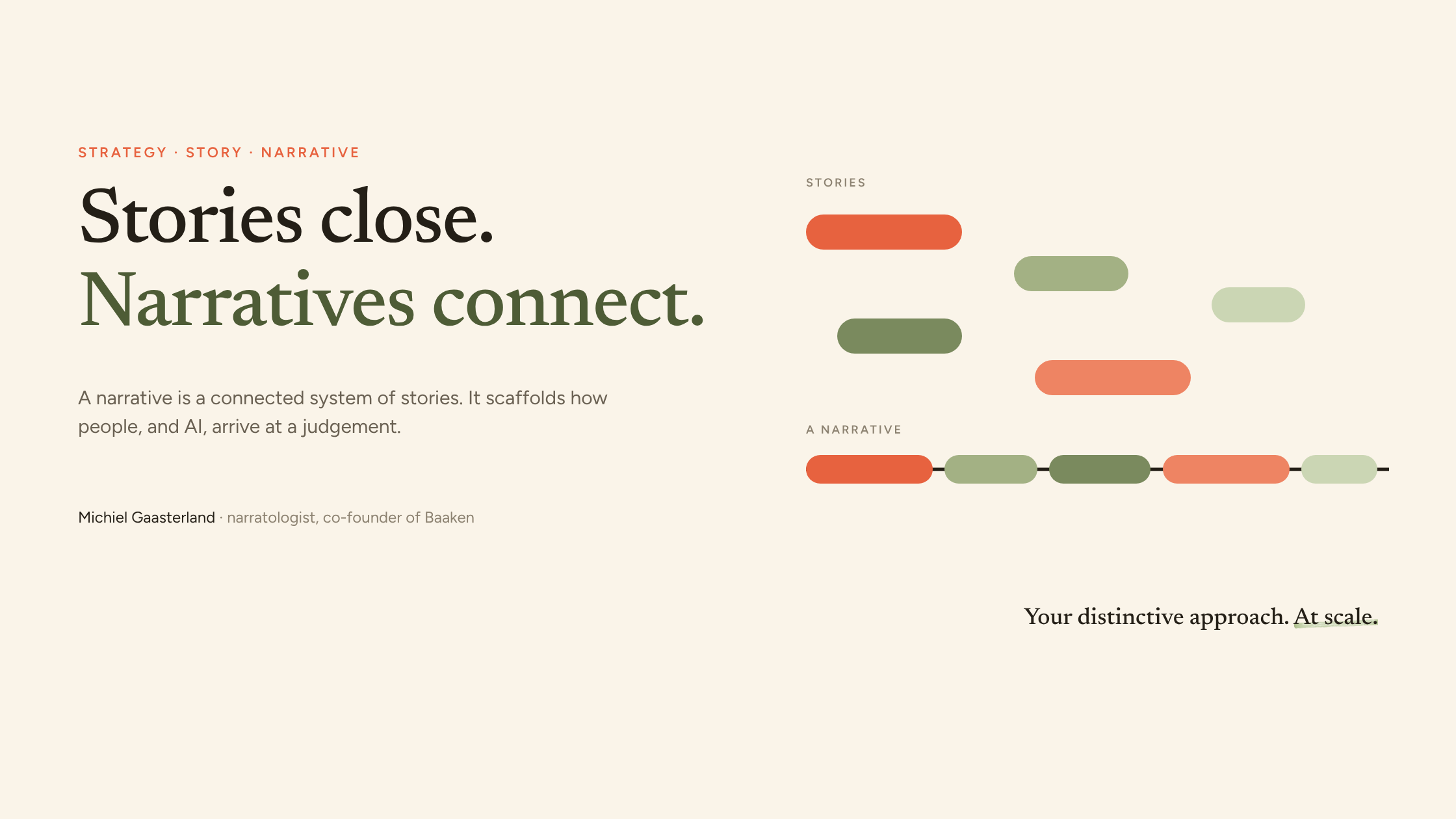
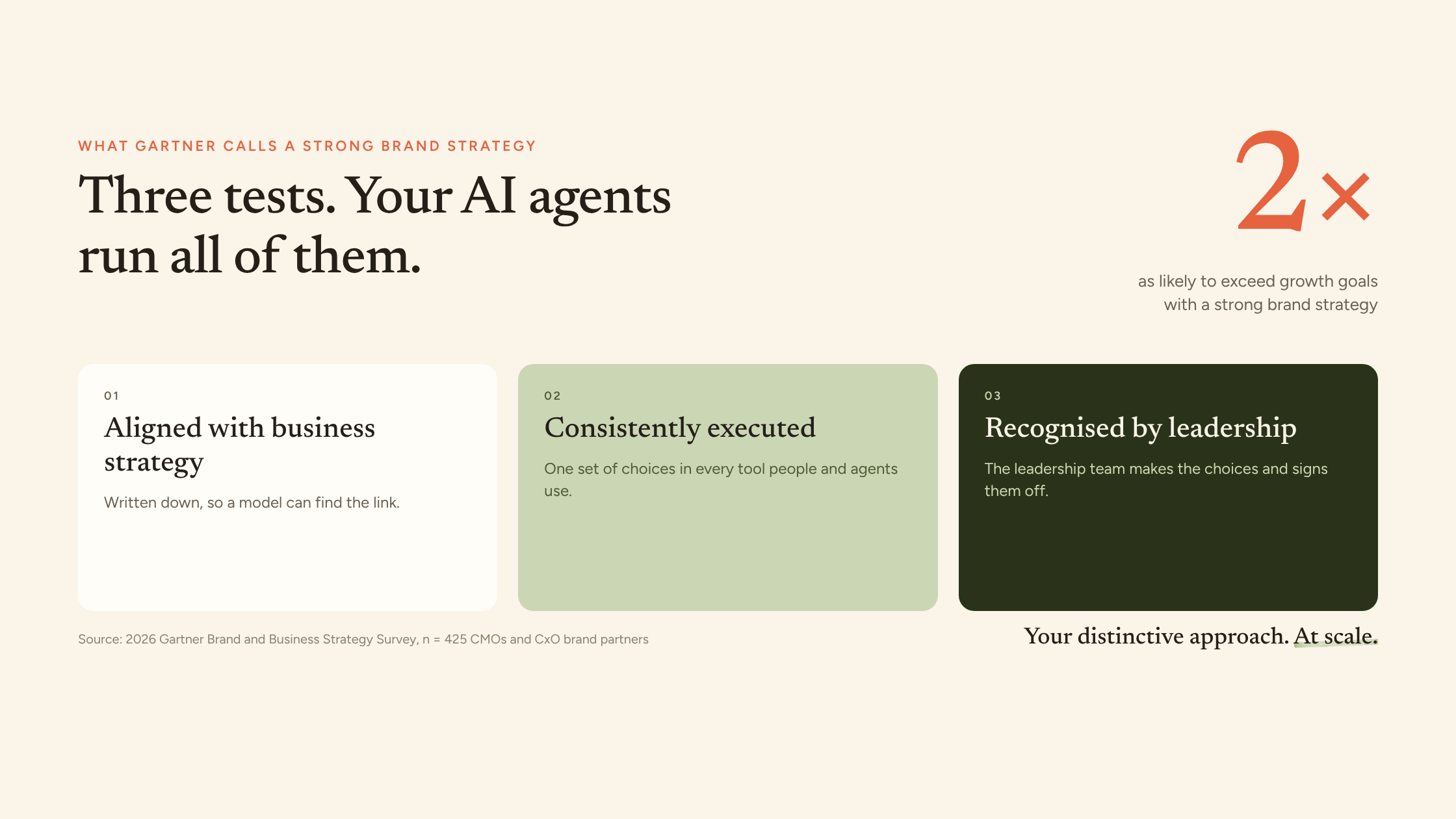
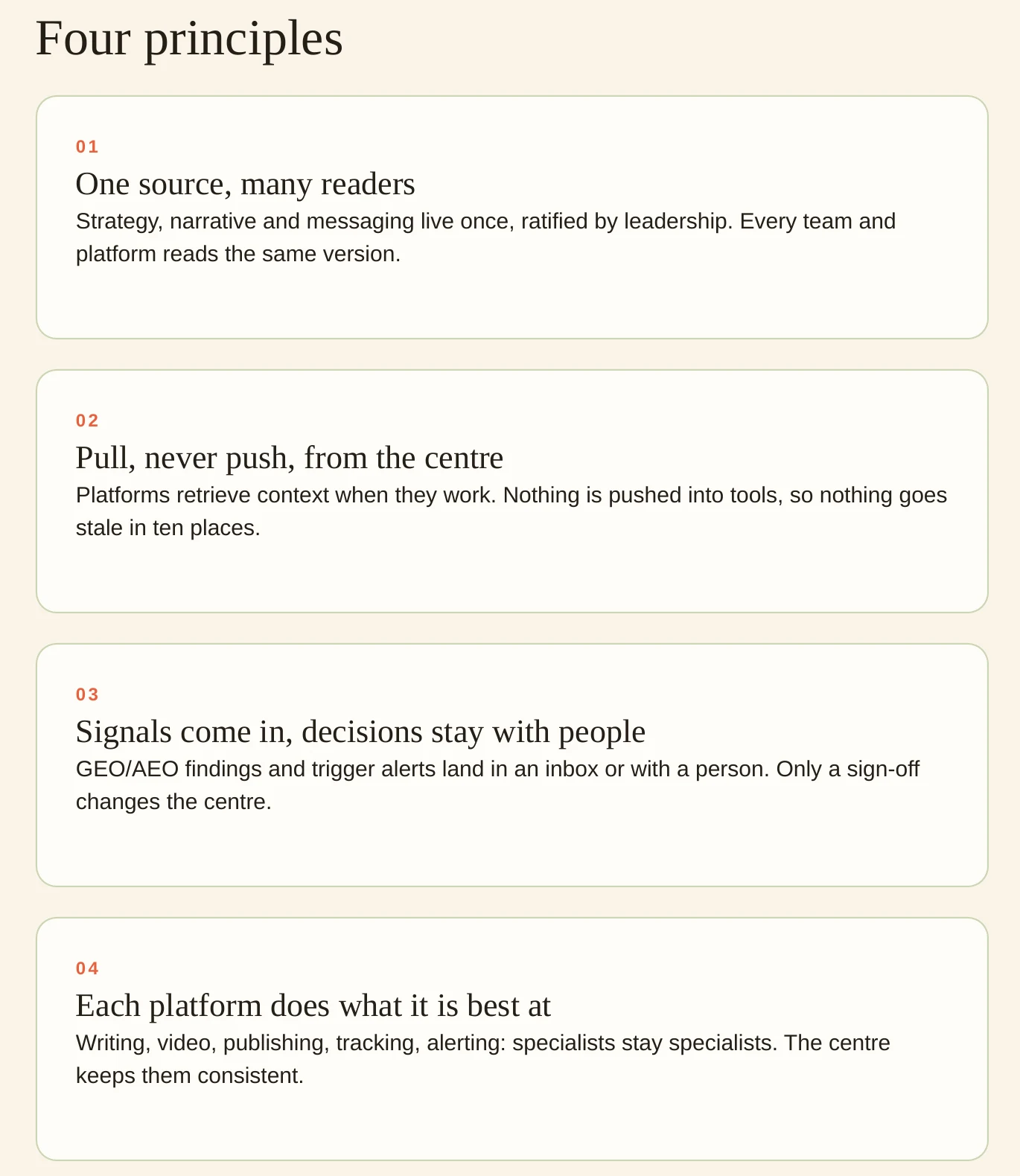
Whatever you create, on whatever platform, context decides whether it sounds like you. People often picture context as a data lake: every deck, call recording and document in one place. Useful, but it can't tell an agent why you win. That sits on top of the data: why customers choose you over the alternatives they weigh. Your leadership team develops that competitive logic and signs it off. Then every person and every agent works from the same choices.
A map to work from
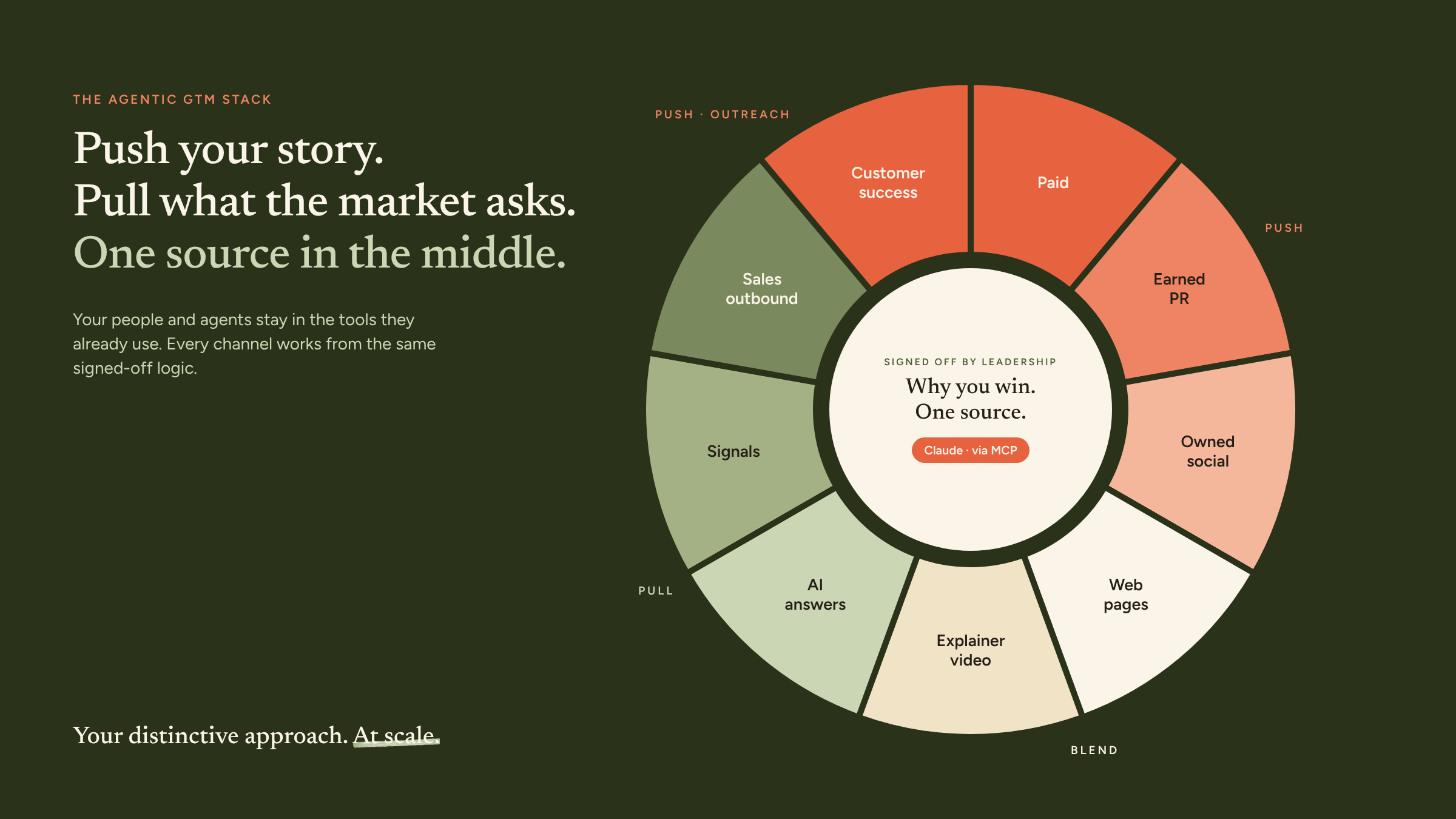
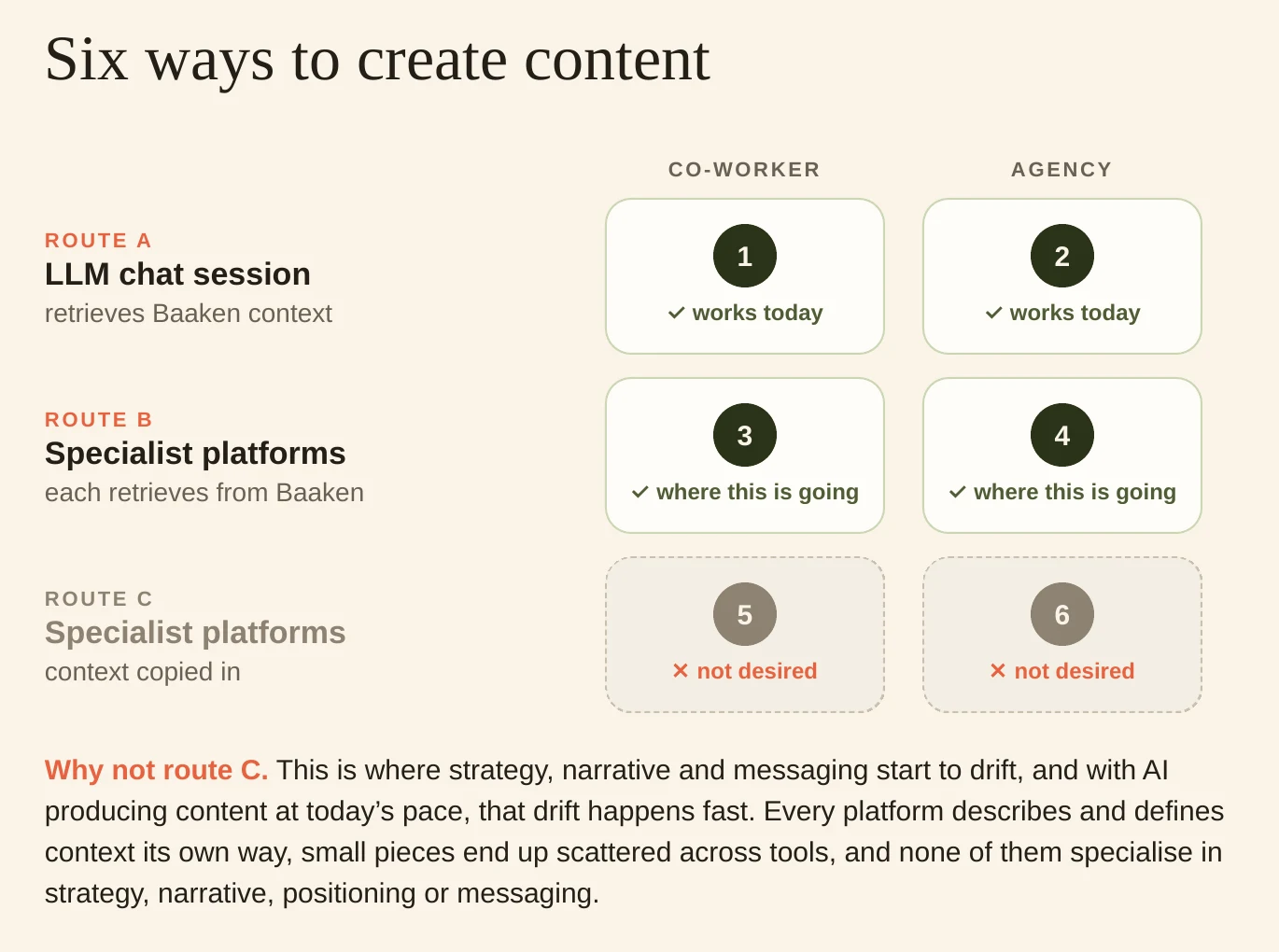
To make this concrete we drew the agentic GTM tech stack map. It shows how you push your story through paid, owned and earned channels, how you pull in what your market asks AI engines, where GEO and AEO matter most, and how signals hand off to sales and customer success. It also shows why two of the six ways to create content become unmanageable.
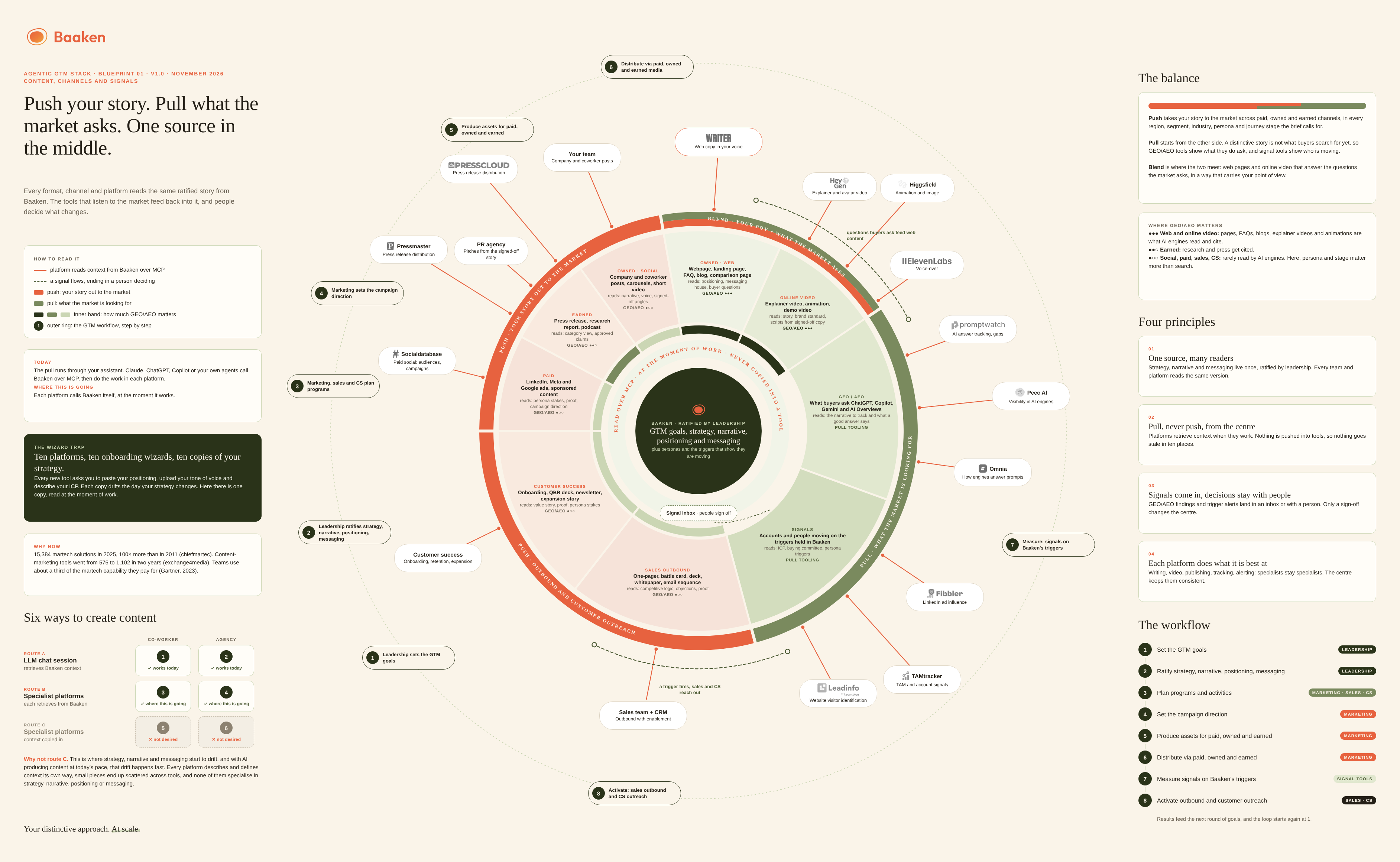
Underneath it all sits one goal. Buyers spend most of their time out of market. The companies they remember when they're ready are the ones whose story reached them the same way at every stage.
Your distinctive approach. At scale.

Co-founder of Baaken. Follow on LinkedIn